Before I start, I want to share a quick reflection with you: Why my first blog post is about powerlifting?
I chose powerlifting as the first story on this blog for a reason that it actually expresses a lot about me and my approach and mentality to life.
- Structured thinking: I naturally approach topics through frameworks, strategies, systems.
- Long-term mindset: I try to think in 1–3–5–10 year horizons, not quick wins.
- Discipline and consistency lead to progress: whether it is career, sport, orlearning.
- Curiosity and learning mindset: Always happy to learn something new
- Humility with ambition: While I am proud of results, aware that the road is long and there is always room to progress and be better.
- Mentor oriented: I value coaches, advisors, people who sharpen me. I love working with clever people and appreciate if someone is an expert in their own area.
- Strategic but practical: Big ideas are not enough without action. I am usually action oriented and want to make things happen.
Over the years I realized that the principles behind good training are surprisingly universal or in other words: transferable knowledge. Whether it is other sport, career, learning, or personal development, the same patterns appear again and again: You need structure, patience, humility and resistance to learn from people who are better than you. And you need the discipline to keep showing up when progress is slow or
invisible. Powerlifting simply made these lessons very tangible for me.
In many ways this blog – as it is a representation or reflection of me – will follow the same philosophy.
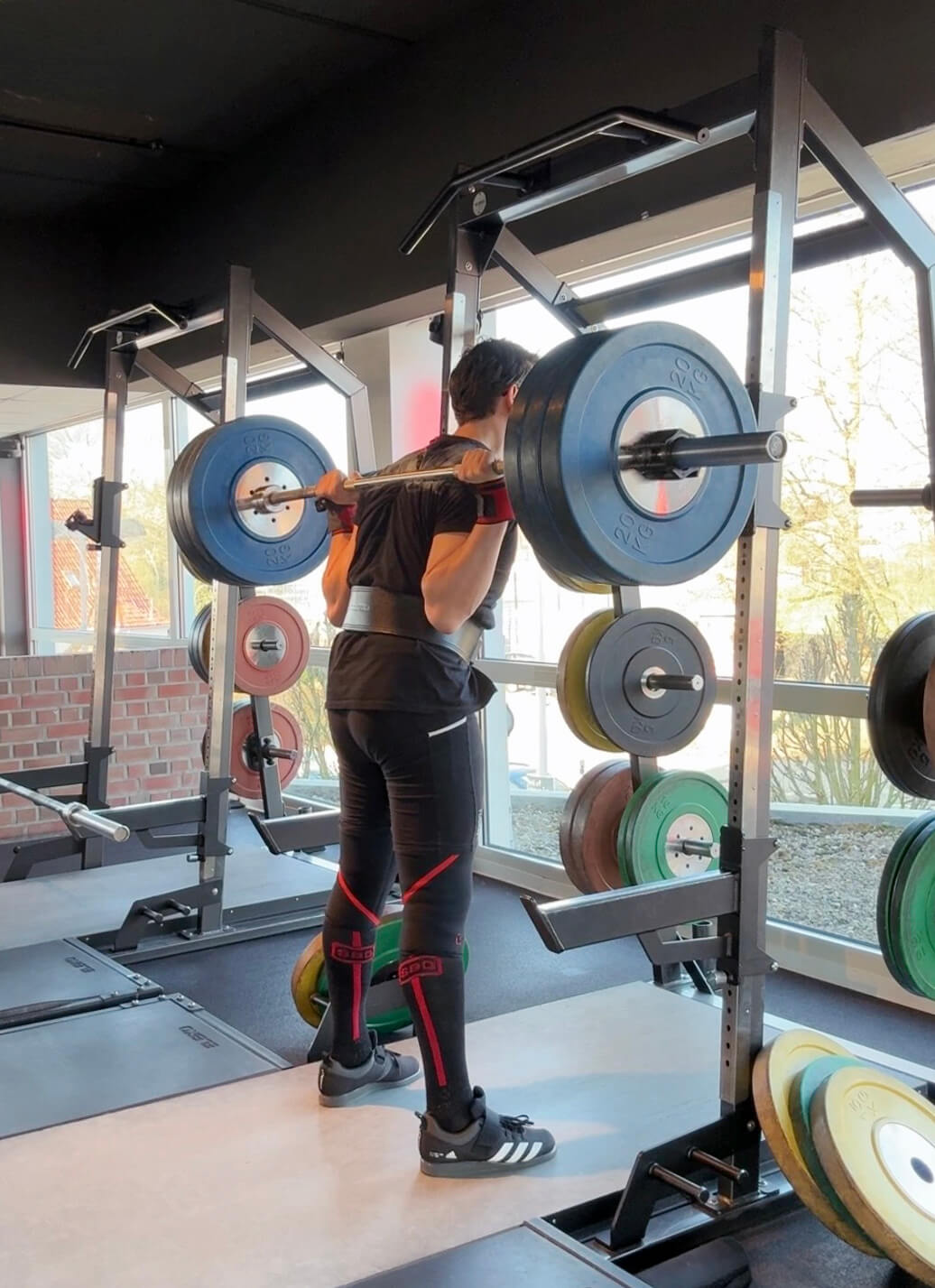
For the past twelve years I have been an amateur powerlifter. Nothing spectacular. I can squat 180 kg; deadlift 200 kg and bench press 120 kg. These numbers would not impress professional lifters who move much higher (double or triple) weights during a regular training session.
But for me, these numbers represent twelve years of consistent work under the guidance of a professional coach, sometimes supported by a nutrition expert, and thousands of hours spent learning about the body, nutrition and vitamins, recovery, focus, patience, and mindset.
Powerlifting became for me much more than a sport.
So What Powerlifting Taught Me?
- Leave Your Ego at the Door
One of the first lessons my coach taught me was simple and uncomfortable: work with professionals and trust the process.
Some training days I only lift 60-70% of my maximum. Early on this was frustrating. If I had the energy, why not push harder?
But those sessions are where the real work happens. Technique improves, the body recovers, foundation (or my bottom-line) becomes stronger. Over time I learned that sustainable progress is not about constantly pushing my maximum (or the top-line higher, but about raising the floor.
2. Progress Is Rarely Linear
Every training block (1 block might be 4-8 weeks long) builds intensity step by step.
The programme is personalised and carefully designed around recovery and the principle of supercompensation.
Then workload reduced temporarily and we start building again. At first it felt like a step backwards. Later I understood it is simply how long-term progress works.
Growth often requires temporary retreat.
This lesson applies far beyond sport. You cant push for progress all the time, you need sometimes to reset and take the pressure away.
3. Strength Requires Awareness
Heavy lifting is only one part of the process. Mobility, stretching, warm-up routines, sauna sessions, sport massage, and body awareness are just as important. Without them the entire system becomes fragile.
Over the years I learned to pay attention to small signals from the body. Tightness in the hips, tension in the shoulders or fatigue in the lower back. These details matter because strength is built on a stable foundation
4. Training as Meditation
For me, training is also a form of me-time and meditation.
Before attempting a heavy lift I mentally scan my body from the ground upward. Feet, knees, hips, back, shoulders, grip, breathing as everything has to align.
For those few seconds nothing else exists, just focus and control.
Injuries Are Teachers
5. Over 12 years I experienced 3 injuries.
Each time my coach helped me avoid the most dangerous trap: developing an injured mindset.
Instead of stopping completely we adapted the training. Working around the limitation while allowing the body to recover. It is a delicate balance but when done properly it turns setbacks into learning periods. Interestingly, some of the biggest technical improvements happened during these phases.
6. Train With Purpose
I never simply “go to the gym”. Every training session has an objective. A weight target, a technical adjustment, a volume goal, or a specific movement pattern to refine. There are always short-term targets and longer-term goals. Training without intention is just activity but training with intention becomes practice. I don’t even call going to the gym “training”; I call it “practicing”. Every main lifting set I imagine and act like I am on stage on a competition, I try to execute my exercise as perfectly as possible.
Even more, I try to organize my training day around the training time ensuring my energy level is the highest when in the gym; I eat and rest accordingly, also I try to make sure I am not under time pressure allowing to spend enough time on my training.
7. Small Wins Matter
There are periods when progress feels almost invisible. The weight increases a little or almost nothing. But these small improvements accumulate over time.
Powerlifting taught me to appreciate incremental progress and to stay patient during plateaus, slow periods, or even setbacks.
8. Discipline Over Circumstance
I do not compete professionally as I am 46, I have a family, children, a career, responsibilities, and travel relatively frequently. Still, over the past decade I have tried to stay consistent. When work takes me somewhere new I look for a local gym near the hotel or improvise with whatever equipment is available. The real competition is not against others. It is the quiet promise you make to yourself to keep showing up.
9. Most knowledge is transferable
During the COVID period, when gyms closed, I returned to running with a group of friends.
By applying the same principles I used in strength training structured progression, consistency, and patience we prepared for and completed a semi-marathon.
It was a good reminder that the lessons learned under the barbell are transferable to other sports as well as to many areas of life.
Powerlifting for me is not about quick victories.
Every training session is new. Some are great, others feel heavy and slow.
Sometimes you move forward, sometimes you step back. Sometimes the body forces you to pause and rebuild from the foundations. But if you stay patient, disciplined, and humble enough to learn, progress eventually returns.
For me powerlifting is not about lifting the biggest weight. It is about continuous improvement, trusting the process, and enjoying the long road. And I am grateful to my coach and training partners who have been part of that journey for the past twelve years.
Thank you for reading my blogpost, let me know if you have any questions,
comments or you want any advice on this topic!
PS: When I finished writing this post, I realized it was missing something: a bit of
humor. So here’s one of my favorite training jokes:
“I have a good muscle memory.
I remember when I was muscular.”